

Anxiety affects millions of Australians, disrupting daily life, relationships, and overall wellbeing. While pharmaceutical interventions remain common, an increasing number of individuals seek alternatives that work with the body's natural healing mechanisms rather than against them. The journey to naturally ease anxiety begins with understanding how our minds and bodies communicate, and harnessing evidence-based strategies that promote lasting change without relying solely on medication. This comprehensive guide explores practical, scientifically-supported approaches that empower you to regain control and cultivate genuine calm.
Understanding the Mind-Body Connection in Anxiety Management
Anxiety manifests as both a psychological and physical experience. When your mind perceives threat, your body responds with increased heart rate, shallow breathing, muscle tension, and heightened alertness. This ancient survival mechanism, whilst protective in genuine danger, becomes problematic when activated by everyday stressors like work deadlines, social situations, or financial concerns.
The stress response cycle involves:
- Activation of the sympathetic nervous system
- Release of cortisol and adrenaline
- Physical symptoms including rapid heartbeat and sweating
- Cognitive changes such as racing thoughts and difficulty concentrating
Breaking this cycle requires addressing both the mental and physical components simultaneously. Recognising the early signs of anxiety enables timely intervention before symptoms escalate into full-blown panic or chronic worry patterns.
The Role of the Subconscious Mind
Your subconscious mind operates as the control centre for automatic responses, habits, and deeply ingrained patterns. Unlike the conscious mind, which processes logical thought, the subconscious responds to imagery, emotion, and repetition. This explains why simply telling yourself not to worry rarely produces lasting results.
Strategic approaches that engage the subconscious, such as hypnotherapy, work by reprogramming automatic anxiety responses at their source. This creates fundamental shifts rather than temporary symptom relief.

Evidence-Based Lifestyle Modifications
Several lifestyle adjustments demonstrate remarkable effectiveness in reducing anxiety naturally. These foundational changes create the optimal internal environment for emotional regulation and resilience.
Physical Activity and Exercise
Regular movement stands as one of the most powerful tools to naturally ease anxiety. Exercise releases endorphins, reduces stress hormones, and improves sleep quality. Research consistently demonstrates that individuals who engage in 150 minutes of moderate activity weekly experience significantly lower anxiety levels than sedentary counterparts.
Optimal exercise approaches include:
- Aerobic activities like walking, swimming, or cycling
- Yoga combining movement with breath awareness
- Strength training to build confidence and physical resilience
- Outdoor activities that provide additional nature exposure benefits
The key lies in consistency rather than intensity. A daily 20-minute walk often proves more beneficial than sporadic gym sessions.
Nutritional Strategies
What you consume directly impacts brain chemistry and nervous system function. Natural approaches to anxiety often emphasize dietary modifications as foundational interventions.
| Food Category | Effect on Anxiety | Examples |
|---|---|---|
| Omega-3 fatty acids | Reduces inflammation, supports brain health | Salmon, walnuts, flaxseeds |
| Magnesium-rich foods | Calms nervous system | Spinach, almonds, dark chocolate |
| Probiotic foods | Supports gut-brain axis | Yoghurt, kimchi, sauerkraut |
| Complex carbohydrates | Stabilizes blood sugar | Whole grains, sweet potato, legumes |
Equally important are substances to limit. Caffeine, alcohol, and refined sugars can trigger or exacerbate anxiety symptoms by disrupting blood sugar levels and overstimulating the nervous system.
Sleep Optimization
Quality sleep restores the nervous system and enhances emotional regulation capabilities. Adults require 7-9 hours of consistent sleep to maintain optimal mental health. Anxiety and sleep exist in a bidirectional relationship; poor sleep worsens anxiety, whilst anxiety disrupts sleep patterns.
Breathwork and Mindfulness Practices
Conscious breathing techniques offer immediate anxiety relief whilst building long-term resilience. Unlike many interventions requiring weeks to show effects, proper breathing provides instant nervous system regulation.
Diaphragmatic Breathing Technique
This foundational practice activates the parasympathetic nervous system, directly counteracting the stress response. Follow these steps:
- Sit comfortably with one hand on your chest, the other on your abdomen
- Inhale slowly through your nose for four counts, allowing your belly to expand
- Hold the breath for two counts
- Exhale through your mouth for six counts, feeling your abdomen deflate
- Repeat for 5-10 minutes
Practice twice daily, even when feeling calm, to train your nervous system's baseline response patterns. This builds capacity to naturally ease anxiety during challenging moments.
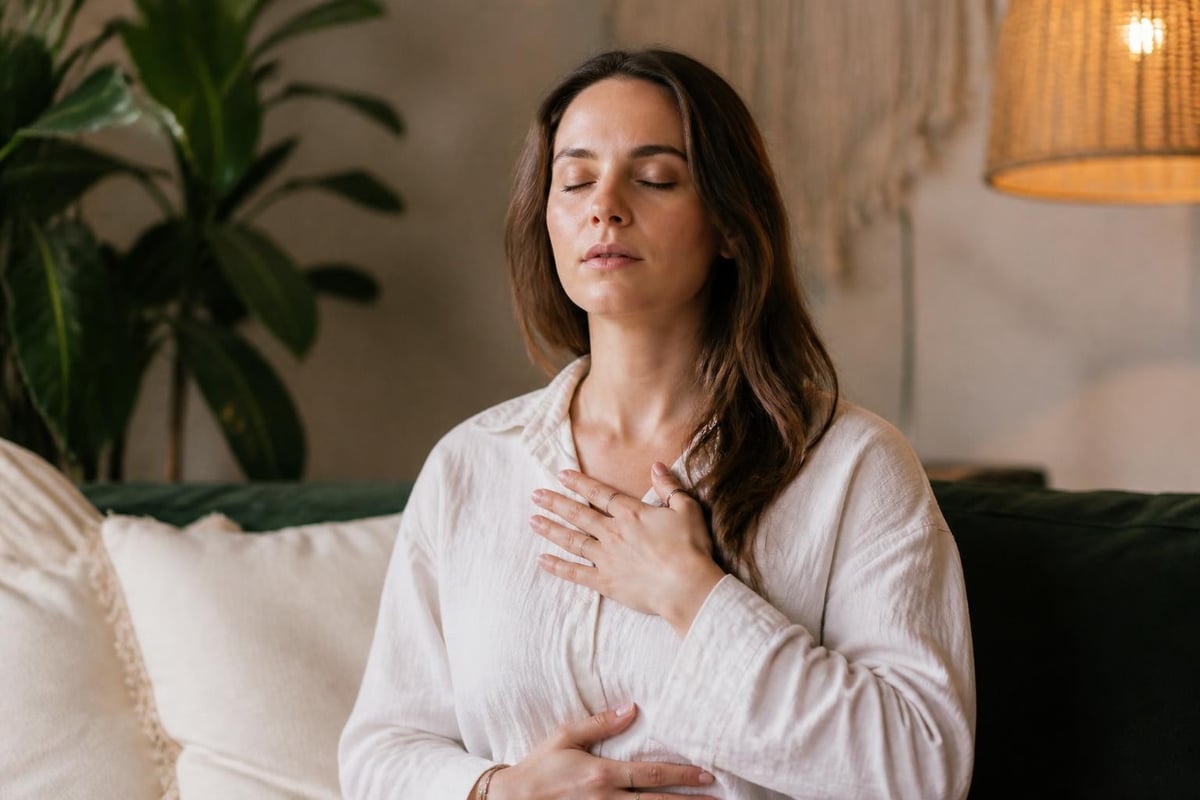
Mindfulness Meditation
Mindfulness cultivates non-judgmental awareness of present-moment experience. Rather than attempting to eliminate anxious thoughts, this practice changes your relationship with them. Research on meditation techniques demonstrates significant anxiety reduction across diverse populations.
Progressive mindfulness approach:
- Week 1-2: Five minutes daily of breath-focused meditation
- Week 3-4: Ten minutes incorporating body awareness
- Week 5+: Fifteen minutes with open awareness practice
Many individuals initially resist meditation, believing they "can't quiet their mind." This misconception prevents engagement with one of the most effective anxiety management tools available. Meditation doesn't eliminate thoughts; it develops the capacity to observe them without reactivity.
Herbal and Natural Supplements
Certain botanicals demonstrate anxiolytic properties supported by clinical evidence. Whilst generally safer than pharmaceutical options, natural remedies for anxiety should be approached thoughtfully and ideally under professional guidance.
| Supplement | Mechanism | Typical Dosage | Considerations |
|---|---|---|---|
| Chamomile | GABA modulation | 400-1600mg daily | May interact with blood thinners |
| Lavender | Serotonergic effects | 80-160mg daily | Avoid during pregnancy |
| Passionflower | GABA enhancement | 500-1000mg daily | May cause drowsiness |
| L-theanine | Promotes alpha brain waves | 200-400mg daily | Generally well-tolerated |
Always consult healthcare providers before introducing supplements, particularly if taking medications or managing health conditions. Quality varies significantly between brands, so select products tested by independent third parties.
Aromatherapy Applications
Essential oils influence the limbic system, the brain's emotional processing centre. Lavender, bergamot, and frankincense demonstrate particular effectiveness for anxiety reduction. Apply diluted oils topically, diffuse during meditation or sleep, or add to bathwater for multi-sensory relaxation experiences.
Cognitive and Therapeutic Approaches
Whilst lifestyle modifications address physiological factors, cognitive interventions target the thought patterns maintaining anxiety. Combining both dimensions creates comprehensive, sustainable change.
Hypnotherapy for Anxiety Management
Hypnotherapy accesses the subconscious mind to identify and transform the root causes of anxiety. Unlike surface-level coping strategies, this approach addresses underlying beliefs, past experiences, and automatic response patterns that generate anxious feelings.
During hypnotic states, the critical faculty relaxes, allowing therapeutic suggestions to bypass conscious resistance. This facilitates rapid integration of new perspectives and behaviours. Hypnotherapy services offer targeted interventions for various anxiety presentations, from social anxiety to panic disorders.
Hypnotherapy addresses anxiety through:
- Desensitization to anxiety triggers
- Installation of calm responses to previously stressful situations
- Resolution of past traumatic events contributing to current anxiety
- Enhancement of confidence and self-efficacy
Sessions typically combine relaxation induction, targeted therapeutic work, and post-hypnotic suggestions that continue working between appointments. Most individuals notice improvements within 3-5 sessions, with many achieving complete anxiety resolution.
Reframing Anxious Thoughts
Anxiety often stems from catastrophic thinking patterns and distorted perceptions of reality. Learning to identify and challenge these thoughts reduces their emotional impact. Common cognitive distortions include all-or-nothing thinking, overgeneralization, and fortune-telling.
When anxious thoughts arise, apply this framework:
- Identify the specific thought creating anxiety
- Examine the evidence supporting and contradicting this thought
- Consider alternative, more balanced perspectives
- Develop a realistic replacement thought
This process doesn't eliminate legitimate concerns but prevents exaggerated worry from dominating your mental landscape.

Social Connection and Environmental Factors
Humans are inherently social beings. Isolation intensifies anxiety, whilst genuine connection provides buffering effects against stress. Prioritize meaningful relationships over superficial social media interactions.
Nature Exposure Benefits
Time spent in natural environments reduces cortisol, lowers blood pressure, and improves mood. The Japanese practice of shinrin-yoku (forest bathing) demonstrates measurable anxiety reduction after just 20 minutes among trees. If accessing wilderness proves challenging, urban parks, gardens, or even indoor plants provide beneficial effects.
Digital Boundaries
Constant connectivity maintains perpetual low-level stress activation. Excessive screen time, particularly before bed, disrupts sleep and increases anxiety symptoms. Establish technology-free periods, particularly during meals and the hour before sleep.
Advanced Natural Interventions
Beyond foundational approaches, several emerging strategies show promising results for those seeking to naturally ease anxiety through innovative methods.
Alternative Therapies
Various complementary practices demonstrate anxiety-reducing benefits:
- Acupuncture: Balances energy meridians and promotes relaxation
- Massage therapy: Reduces muscle tension and stress hormones
- Tai chi: Combines movement, breath, and meditation
- Equine therapy: Provides grounding through animal interaction
These modalities work particularly well when integrated with other approaches rather than used in isolation.
Sound and Music Therapy
Specific sound frequencies influence brainwave patterns and emotional states. Binaural beats, nature sounds, and certain musical compositions facilitate relaxation responses. Create personalized playlists for different contexts: energizing morning music, focused work soundscapes, and calming evening selections.
Creating Your Personalized Anxiety Management Plan
Sustainable anxiety relief requires individualized approaches reflecting your unique circumstances, preferences, and triggers. Generic solutions rarely address specific needs effectively.
Development steps:
- Identify your primary anxiety triggers and symptoms
- Select 3-4 evidence-based strategies from different categories
- Implement one new practice weekly rather than overwhelming yourself
- Track your anxiety levels and symptom changes
- Adjust approaches based on what produces measurable improvements
Remember that consistency outweighs perfection. Missing occasional meditation sessions or eating comfort food doesn't negate progress. The goal involves building sustainable practices, not achieving flawless execution.
When to Seek Professional Support
Whilst many individuals successfully manage anxiety through natural approaches, certain situations warrant professional intervention. Persistent symptoms despite consistent self-help efforts, anxiety interfering with daily functioning, or thoughts of self-harm all indicate the need for expert support.
Professional hypnotherapy accelerates progress by providing personalized strategies, addressing subconscious blocks, and offering accountability. Working with experienced practitioners ensures safe, effective implementation of natural anxiety management techniques.
Building Long-Term Resilience
True anxiety management extends beyond symptom suppression to developing genuine emotional resilience. This involves cultivating capacity to navigate life's challenges without becoming overwhelmed.
Stress Inoculation
Deliberately exposing yourself to manageable stressors in controlled contexts builds confidence and coping capacity. Start with mildly uncomfortable situations, practice your anxiety management tools, and gradually progress to more challenging scenarios. This process, similar to physical strength training, develops psychological robustness.
Purpose and Meaning
Anxiety often diminishes when connected to something larger than immediate worries. Engaging in meaningful activities, contributing to others, and pursuing personal values provides perspective that naturally reduces anxiety's grip. Volunteer work, creative pursuits, or skill development all offer this grounding effect.
Monitoring Progress and Maintaining Gains
Tracking improvements reinforces positive changes and identifies what works best for your unique situation. Simple daily ratings of anxiety levels, sleep quality, and overall wellbeing reveal patterns and progress over time.
Celebrate small victories rather than waiting for complete anxiety elimination. Noticing you handled a previously triggering situation with less distress represents meaningful progress worthy of acknowledgment. These incremental improvements accumulate into substantial transformation.
Remember that naturally managing anxiety represents a journey rather than a destination. Occasional setbacks don't erase progress; they provide opportunities to refine and strengthen your approach. Reading testimonials from others who successfully navigated anxiety often provides encouragement during challenging periods.
Learning to naturally ease anxiety empowers you with sustainable tools for lifelong wellbeing rather than temporary symptom management. By addressing the mind-body connection through evidence-based strategies, you create fundamental shifts in how your nervous system responds to stress. Whether you begin with breathwork, lifestyle modifications, or cognitive techniques, consistent practice produces measurable improvements. Strategic Hypnotherapy Clinic specializes in helping individuals overcome anxiety by harnessing the subconscious mind's transformative potential, offering compassionate expert guidance tailored to your unique needs. Reach out to Strategic Hypnotherapy Clinic to discover how professional hypnotherapy can accelerate your journey toward lasting calm and confidence.


Leave a Reply
Your email is safe with us.