

Anxiety can strike without warning, turning ordinary moments into overwhelming challenges that affect your work, relationships, and overall quality of life. Whether you're experiencing racing thoughts before an important meeting, physical tension that won't subside, or persistent worry that disrupts your sleep, finding effective ways to reduce anxiety fast becomes essential for maintaining wellbeing. The good news is that numerous evidence-based techniques can help you regain control within minutes, empowering you to face life's challenges with greater resilience and calm.
Understanding the Anxiety Response
Your body's anxiety response is a complex interaction between your nervous system, thoughts, and physical sensations. When anxiety strikes, your sympathetic nervous system activates the "fight or flight" response, releasing stress hormones that increase heart rate, tighten muscles, and sharpen focus on perceived threats.
This physiological reaction served our ancestors well when facing genuine dangers, but modern stressors often trigger the same response inappropriately. Recognising the signs of anxiety is the first step toward managing it effectively, and understanding how anxiety manifests in your body and mind can help you intervene before symptoms escalate.
The Mind-Body Connection
The relationship between your thoughts and physical sensations creates a feedback loop that either intensifies or diminishes anxiety. When you notice your heart racing, your mind might interpret this as danger, which then increases the physical response. Breaking this cycle requires techniques that address both mental and physical components simultaneously.
Hypnotherapy and other mind-body approaches work precisely on this connection, helping you access deeper states of relaxation and reframe unhelpful thought patterns that fuel anxiety.
Breathing Techniques to Reduce Anxiety Fast
Controlled breathing stands as one of the most powerful tools to reduce anxiety fast because it directly influences your autonomic nervous system. Unlike other bodily functions that operate automatically, breathing bridges the conscious and unconscious, giving you immediate access to calming your physiology.
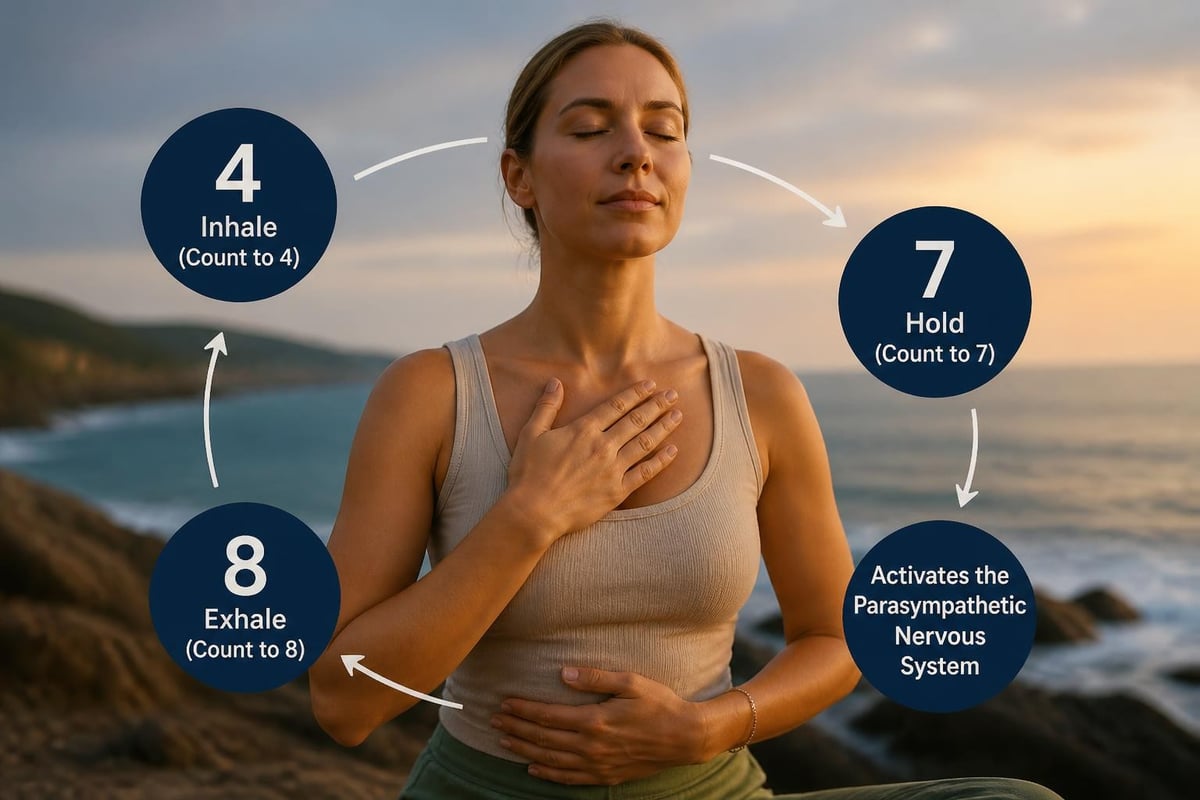
The 4-7-8 Breathing Method
This technique activates your parasympathetic nervous system within seconds:
- Exhale completely through your mouth
- Close your mouth and inhale quietly through your nose for 4 counts
- Hold your breath for 7 counts
- Exhale completely through your mouth for 8 counts
- Repeat the cycle three more times
The extended exhalation signals your body to shift from stress mode to relaxation mode, delivering rapid relief from acute anxiety symptoms.
Box Breathing for Immediate Calm
Used by athletes and emergency responders, box breathing creates mental clarity alongside physical relaxation:
- Inhale for 4 counts
- Hold for 4 counts
- Exhale for 4 counts
- Hold for 4 counts
- Repeat for 2-5 minutes
This equal-ratio breathing pattern helps regulate your nervous system quickly, making it particularly useful during panic attacks or high-stress moments.
Physical Grounding Techniques
Grounding exercises anchor you in the present moment, interrupting the anxiety spiral by redirecting your attention to immediate sensory experiences rather than worried thoughts about the future or past.
The 5-4-3-2-1 Method
This sensory awareness technique engages your observational mind to reduce anxiety fast:
| Step | Action | Purpose |
|---|---|---|
| 5 | Name 5 things you can see | Visual grounding |
| 4 | Name 4 things you can touch | Tactile awareness |
| 3 | Name 3 things you can hear | Auditory focus |
| 2 | Name 2 things you can smell | Olfactory engagement |
| 1 | Name 1 thing you can taste | Complete sensory presence |
By systematically engaging all five senses, you bring your awareness fully into the present moment where anxiety about future events cannot maintain its grip.
Progressive Muscle Relaxation
This evidence-based technique helps release the physical tension that accompanies anxious thoughts:
Systematically tense and release muscle groups, starting from your toes and moving upward to your head. Hold each tension for 5 seconds, then release for 10 seconds, noticing the contrast between tension and relaxation. This practice not only reduces immediate physical symptoms but also trains your body to recognise and release tension before it escalates.
The CARE Approach for Rapid Anxiety Reduction
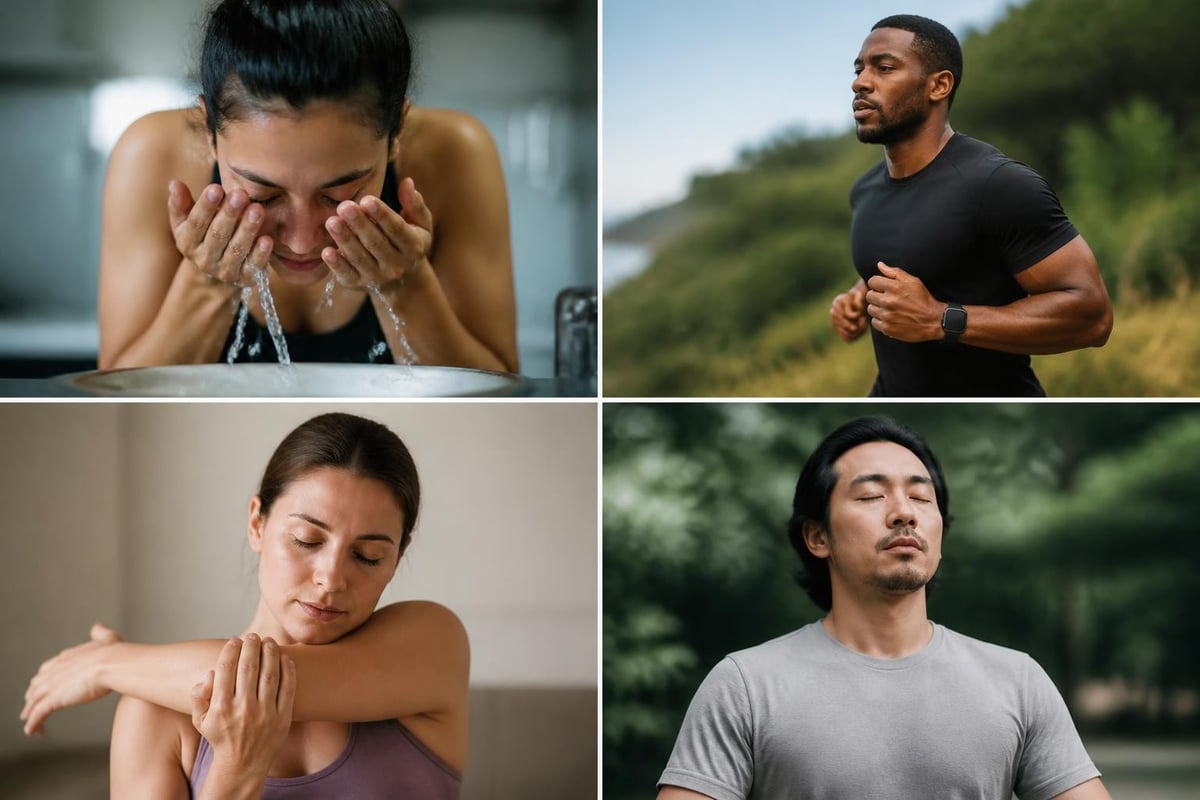
Physiological interventions can deliver immediate anxiety relief through the CARE method, which leverages your body's natural calming mechanisms:
Cooling your face with cold water or ice activates the dive reflex, automatically slowing your heart rate and reducing the intensity of panic symptoms. Simply splash cold water on your face or hold an ice pack to your forehead for 30 seconds.
Activating your body through movement helps metabolise stress hormones. A brief walk, jumping jacks, or even shaking out your limbs can shift your physiological state within minutes.
Relaxing your muscles through intentional release counteracts the tension that builds during anxious episodes. Focus particularly on your jaw, shoulders, and hands, which commonly hold stress.
Exhaling slowly and completely signals safety to your nervous system. Make your out-breath longer than your in-breath to maximise the calming effect.
Cognitive Techniques to Interrupt Anxious Thinking
Your thoughts significantly influence your emotional state, and learning to recognise and redirect unhelpful thinking patterns can help you reduce anxiety fast when physical symptoms alone don't tell the whole story.
The Thought Record Practice
When anxiety strikes, pause and document:
- The triggering situation
- Your automatic thoughts
- The emotions you're experiencing
- Evidence supporting your thoughts
- Evidence contradicting your thoughts
- A more balanced perspective
This structured approach creates distance between you and your anxious thoughts, allowing you to evaluate them objectively rather than accepting them as absolute truth.
Worry Time Scheduling
Rather than trying to suppress anxious thoughts throughout the day, designate a specific 15-minute "worry time" each day. When worries arise outside this window, acknowledge them and postpone detailed consideration until your scheduled time. This technique can significantly improve sleep quality when nighttime anxiety disrupts rest.
Movement and Physical Activity
Physical activity offers one of the most reliable ways to reduce anxiety fast while also building long-term resilience against future episodes. Exercise metabolises stress hormones, releases endorphins, and provides a healthy outlet for nervous energy.
Immediate Movement Options
You don't need a gym membership or extensive time commitment to harness movement's anxiety-reducing benefits:
- Take a brisk 5-minute walk around your building or neighbourhood
- Do 20 jumping jacks or run in place for 60 seconds
- Stretch major muscle groups with gentle yoga poses
- Dance to one favourite song with full energy
- Climb stairs for 2-3 minutes
Quick physical activities can shift your mental state by interrupting the anxiety loop and redirecting your focus to your body's capabilities rather than perceived threats.
Building an Active Lifestyle
While movement helps in the moment, regular physical activity provides lasting anxiety management benefits. Aim for at least 30 minutes of moderate activity most days, choosing activities you genuinely enjoy to ensure consistency.
Hypnotherapy for Lasting Anxiety Relief
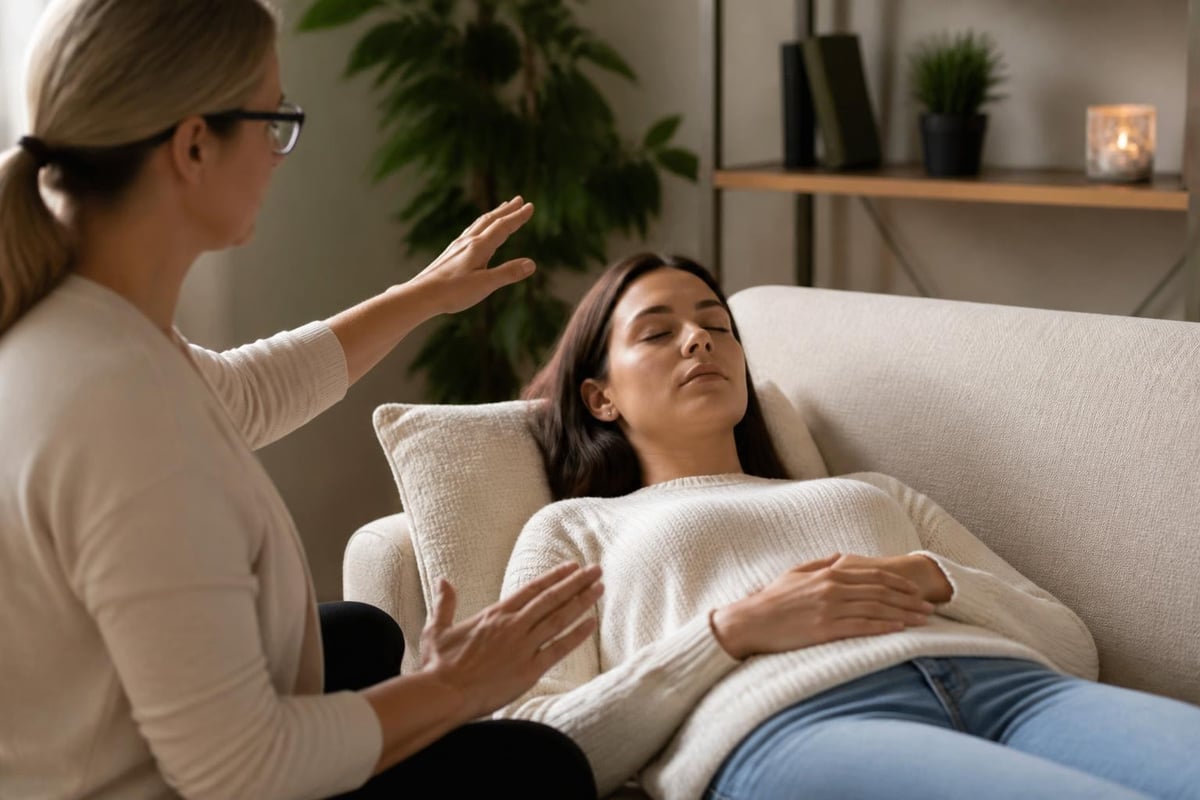
While quick techniques provide immediate relief, addressing the underlying patterns that generate anxiety creates more sustainable change. Hypnotherapy works with your subconscious mind to identify and transform the root causes of anxious responses.
How Hypnotherapy Addresses Anxiety
During hypnotherapy sessions, you enter a deeply relaxed state that allows access to subconscious patterns and beliefs. This focused attention enables you to:
- Reframe automatic negative thoughts at their source
- Release stored emotional tension from past experiences
- Install new, calmer responses to previously triggering situations
- Strengthen your natural relaxation abilities
The services offered through professional hypnotherapy combine evidence-based techniques with personalised approaches that address your unique anxiety triggers and symptoms.
Self-Hypnosis for Daily Practice
Learning self-hypnosis techniques gives you a portable tool to reduce anxiety fast whenever needed. Basic self-hypnosis involves:
- Finding a quiet, comfortable space
- Focusing on your breathing to induce relaxation
- Using positive suggestions aligned with your goals
- Visualising yourself responding calmly to challenging situations
- Gradually returning to full awareness
With practice, you can enter this calm, focused state within minutes, accessing the same benefits that professional sessions provide.
Lifestyle Factors That Support Anxiety Management
Your daily habits create the foundation for either resilience or vulnerability to anxiety. While these factors don't reduce anxiety fast in the immediate sense, they significantly influence how frequently and intensely anxiety arises.
Nutrition and Anxiety
| Food Category | Effect on Anxiety | Recommendations |
|---|---|---|
| Refined sugars | Increases blood sugar spikes and crashes | Limit processed sweets and sodas |
| Caffeine | Can trigger or worsen anxiety symptoms | Monitor intake, especially after midday |
| Omega-3 fatty acids | Supports brain health and mood regulation | Include fish, walnuts, flaxseeds |
| Complex carbohydrates | Stabilises blood sugar and serotonin | Choose whole grains, vegetables |
| Adequate hydration | Prevents physiological stress | Drink 8-10 glasses of water daily |
Sleep Hygiene
Poor sleep and anxiety create a vicious cycle, with each exacerbating the other. Establishing consistent sleep routines helps break this pattern:
- Maintain regular sleep and wake times, even on weekends
- Create a cool, dark, quiet sleeping environment
- Avoid screens for 60 minutes before bed
- Practice relaxation techniques as part of your bedtime routine
- Limit caffeine and alcohol, particularly in the evening
Creating Your Personal Anxiety Toolkit
Different techniques work better for different people and situations. Building a personalised toolkit ensures you have appropriate strategies regardless of where anxiety strikes.
Assessing What Works for You
Experiment with various approaches systematically:
Keep a journal noting which techniques you try, the circumstances, and how effective they were. Over 2-3 weeks, patterns will emerge showing which methods deliver the most reliable results for your specific anxiety triggers.
Adapting Techniques to Different Settings
Some anxiety-reduction methods work well in public settings, while others require privacy:
Discreet public techniques include subtle breathing exercises, the 5-4-3-2-1 sensory method, and progressive muscle relaxation without obvious movement.
Private space techniques encompass vigorous physical activity, vocal exercises, extended relaxation practices, and hypnotherapy sessions.
Having options for both scenarios ensures you can reduce anxiety fast regardless of your location when symptoms arise.
Building Long-Term Resilience
Quick relief techniques serve an important purpose, but lasting anxiety management requires addressing both immediate symptoms and underlying vulnerability. The goal extends beyond simply reducing anxiety fast to fundamentally changing your relationship with anxious thoughts and sensations.
Consistency Over Intensity
Regular practice of anxiety-management techniques builds resilience more effectively than sporadic intensive efforts. Dedicating just 10-15 minutes daily to breathing exercises, meditation, or self-hypnosis creates cumulative benefits that reduce both the frequency and intensity of anxiety episodes.
Professional Support for Deeper Change
While self-help strategies provide valuable tools, working with experienced professionals can accelerate your progress and address complex patterns that self-directed efforts might miss. Client testimonials reveal how professional guidance helps people achieve breakthroughs that seemed impossible through individual effort alone.
Professional hypnotherapy creates a supportive environment where you can safely explore anxiety's roots, develop new coping mechanisms, and experience profound shifts in how you respond to stress.
Recognising When to Seek Additional Help
Understanding how to reduce anxiety fast empowers you with immediate relief strategies, but recognising when anxiety exceeds self-management capabilities demonstrates wisdom rather than weakness.
Consider professional support when:
- Anxiety significantly interferes with work, relationships, or daily activities
- Physical symptoms persist despite using relief techniques
- You rely on alcohol, substances, or other unhealthy coping mechanisms
- Panic attacks occur regularly or increase in frequency
- Depression accompanies your anxiety symptoms
- You experience thoughts of self-harm
Evidence-based approaches to managing anxiety include therapy, medication when appropriate, and holistic methods that address the whole person rather than just symptoms.
The Role of Integrated Care
Combining multiple approaches often yields better results than relying on a single method. Integrating quick relief techniques, regular self-care practices, and professional therapeutic support creates a comprehensive anxiety management system tailored to your needs.
Mastering techniques to reduce anxiety fast gives you immediate relief when symptoms strike, while building consistent practices and addressing underlying patterns creates lasting change. When you're ready to move beyond managing symptoms to transforming your relationship with anxiety at its deepest levels, Strategic Hypnotherapy Clinic offers compassionate, expert guidance using the powerful mind-body connection to help you achieve the calm, confident life you deserve.


Leave a Reply
Your email is safe with us.